
How Dyna-Glo’s Dual Zone Charcoal System Actually Works
A dual zone charcoal grill splits your cooking surface into two independently controlled heat areas. One side runs hot for searing, the other stays cooler for slow roasting or holding finished food.
Dyna-Glo’s dual zone system uses a center divider plate below the grates and separate damper controls for each firebox chamber. That physical barrier keeps coals contained to one side, so you’re not guessing where direct heat ends and indirect begins. We built this setup into our charcoal lineup because backyard cooks need the flexibility to handle bone-in chicken and ribeyes at the same time without moving grates mid-cook.
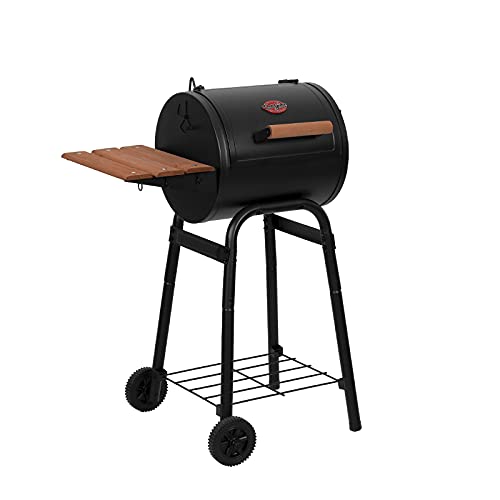
The Center Divider Plate and Split Firebox Layout
Most single-zone charcoal grills let coals spread across the entire bottom, which means heat radiates everywhere. Dyna-Glo’s dual zone design drops a steel divider plate down the center of the firebox, creating two separate charcoal chambers.
Each chamber holds its own coal bed. You can pile coals high on the left for direct grilling and leave the right side empty for indirect heat, or light both sides to different depths for two tiers of temperature. The divider rises about four inches from the bottom, so ash still falls through to the catch pan below, but live coals can’t migrate across the gap.
The Dyna-Glo Dual Zone Premium Charcoal Grill uses 14-gauge steel for that center plate, thick enough that it won’t warp under repeated high heat. Cheaper models sometimes use thin stamped metal that buckles after a season, letting coals spill over and defeating the whole point of the split.
Independent Damper Controls for Each Zone
Heat level on a charcoal grill comes down to oxygen flow. More air means hotter coals; less air drops the temperature or smothers the fire entirely.
Our dual zone grills mount two separate bottom dampers, one under each firebox chamber. Slide the left damper wide open and you’ll push that side past 500°F for steaks. Close the right damper halfway and that zone settles around 300°F for chicken quarters.
Adjusting Mid-Cook Without Opening the Lid
Both dampers slide from outside the grill, so you can throttle airflow without lifting the lid and losing heat. If the direct side climbs too high, you can choke it back in seconds. If the indirect side needs a bump to finish a pork shoulder, crack that damper another inch.
The top vent still affects both zones equally, so we recommend leaving it fully open and doing all your temperature control from the bottom dampers. That keeps smoke moving through the grill instead of building up stale gases that turn food bitter.
Why Split Cooking Grates Matter as Much as the Firebox
The firebox divider stops coals from mixing, but you still need grates that match that layout. Dyna-Glo dual zone grills use two independent grate sections, each sitting directly over its own coal chamber.
That split lets you lift one grate to add more charcoal or adjust coal placement without touching the other side. When you’re reverse-searing ribeyes, you can pull the indirect grate, move the steaks over, then drop the grate back in place—all while the direct side stays untouched and ready.
Grate Material and Heat Retention
We use cast iron grates on both sides because they hold temperature better than plated steel. When you lay cold meat on cast iron over a hot fire, the grate stays hot enough to keep searing instead of going cold and steaming the surface.
Cast iron does rust if you don’t oil it after each cook, but that surface also builds seasoning over time that makes it nearly nonstick. If you’d rather skip the maintenance, our standard charcoal grill lineup includes porcelain-coated options that give up a bit of heat retention in exchange for easier cleanup.

Practical Cooking Scenarios Where Dual Zones Save Time
The most common use case is searing proteins on the hot side while vegetables or buns toast on the cool side. You’re not juggling timing or moving food around—the grill holds both temperatures at once.
Reverse Searing Thick Cuts
For steaks over an inch thick, dual zones let you bring the meat up to temp slowly on the indirect side, then move it to the direct side for a two-minute sear. The result is edge-to-edge medium rare with a charred crust, something you can’t get by leaving a thick steak over high heat the whole time.
Holding Finished Food Without Drying It Out
When burgers come off the direct zone, they can rest on the cool side and stay warm without overcooking. That means you can cook in batches for a crowd without serving cold food or keeping a tray in the oven.
Some cooks also use the cool zone as a warming shelf for sauces or melting butter—anything that needs gentle heat without direct flame contact.
Why the Dual Zone Design Works for Everyday Grilling
Dual zone charcoal grills don’t require special technique or extra fuel—they just give you two independent cooking surfaces instead of one shared heat source. That split eliminates the guesswork of whether your indirect zone is actually cool enough or your sear zone is hot enough.
Dyna-Glo built this system with thick steel dividers and accessible damper controls because backyard cooks need tools that work every time, not just when conditions are perfect. The setup handles everything from weeknight burgers to weekend brisket without asking you to be a pit master first.
Common Questions About Dual Zone Charcoal Grilling
No. You can light one side and leave the other empty if you only need a single heat zone that day.
The advantage is that when you do need both zones, the divider keeps them separate so you’re not fighting a single coal bed that’s trying to even out its own temperature.
You can approximate it by banking all your coals to one side, which creates a hot zone and a cooler zone by default.
But without a physical divider and separate dampers, you won’t get the same level of independent control. Coals will shift, heat will radiate across the firebox, and you’ll spend more time managing coal placement than actually cooking.
For the hot zone, fill a chimney starter about three-quarters full—that’s roughly 75 briquettes or 5 pounds of lump charcoal. Dump those on one side once they’re ashed over.
The cool zone usually stays empty if you’re using indirect heat, or you can light a half chimney there for moderate two-zone grilling. Total fuel cost per cook runs about the same as a single-zone grill because you’re only lighting what you need.
Most Dyna-Glo dual zone models let you lift the divider plate out after the grill cools. Ash falls through the gaps during cooking, so the plate itself usually just needs a quick brush.
If grease builds up on it, pull it out and scrub it with hot soapy water, then dry it completely before reinstalling to prevent rust.
Only if you light both zones at full capacity every time, which most cooks don’t.
In practice, you often run one hot zone and leave the other empty or barely lit, so fuel consumption stays close to what you’d use on a single-zone grill cooking the same amount of food. The difference is control, not fuel cost.
Yes. Drop wood chunks directly on the coals in whichever zone you’re using for indirect cooking.
The divider keeps smoke contained over the food instead of letting it disperse across an open firebox. If you’re running both zones, put the wood on the indirect side so it smokes at a lower temperature instead of flaming up over direct heat.